Help4Addiction

Get in touch for free and immediate advice.

Advisers are online and answering calls now

Private Addiction Clinics London: chosen with you, not sold to you

A single free phone call and you will know which kind of care fits, roughly what it costs and how soon a place could be ready. Nothing to pay, nothing to commit to, and no pressure at the end of it.

  • Free and confidential
  • Open 24 hours a day
  • CQC-registered UK partners
Step 1 of 4
What Addiction Can We Help You With?
  • 24 hours a day Someone picks up, including nights and weekends
  • Nationwide CQC-registered partner clinics, in the city and well beyond it
  • Since 2013 Walking families through exactly this decision
  • 12 months Free weekly aftercare once a programme ends
Start with the right setting

Three kinds of care, and how to tell which one you need

Almost every mistake families make at this stage comes from the same place: picking a place before working out what level of medical cover the person actually needs. Get that right and the rest gets much easier. Rehab is the word almost everybody searches for, but addiction treatment is delivered in three quite different settings, and which suits depends on the body as much as the mind.

Hospital inpatient care

The highest level available: someone is on the ward around the clock, and withdrawal is managed rather than simply monitored. A consultant in addiction psychiatry or a specialist physician leads the team.

  • Consultant psychiatrist
  • Psychiatric nurses
  • Clinical psychologists
  • Pharmacists
  • Occupational therapists
  • Social workers

Who it is for Severe alcohol dependence, several substances at once, any history of withdrawal seizures or delirium tremens, or a serious physical or psychiatric condition running alongside.
Residential rehab

A structured live-in programme, usually a month, sometimes longer. This is what most families mean when they say residential rehab. Some of these places run a medically assisted detox on site. Others admit somebody only once withdrawal is over and concentrate on the psychological work.

  • Addictions counsellors
  • Registered nurses
  • Visiting GP
  • Project workers
  • Social workers

Who it is for Anyone who needs to be away from the situation they are in, with daily group work, individual therapy and a written relapse prevention plan before they go home.

Community and outpatient support

You carry on living at home. That means keyworking appointments, group work, structured drinking reduction, and prescribers managing substitute medication where that is what is needed.

  • Prescribing clinicians
  • Keyworkers
  • Group facilitators
  • Recovery workers

Who it is for Anyone who cannot step out of work or family life for a month. Cheaper and less disruptive, but it offers far less protection from the triggers and the people that surround the problem.

Not sure which of the three applies?

That is the question our free assessment call exists to answer. We ask how much is being drunk or taken, for how long, what the physical health picture looks like and what has been tried before. Ten minutes on the phone will tell you more than a fortnight of reading.

Talk it through
You are not the first

Choosing well is hard when you are frightened and short of time

Most of those who ring us are not the ones drinking or using. They are the wife, the dad, the daughter who has spent a fortnight reading and somehow knows less than when they started.

Nicholas Conn, founder of Help 4 Addiction Nicholas Conn founded Help4Addiction in 2013 after coming through his own struggle. He built the kind of help he could not find at the time.
01
Where it usually starts

Every place you look at says the same three things

Warm lighting, a garden, the word bespoke. A promise that the programme is tailored to the individual. No price anywhere, and a form that wants your details before it will tell you anything useful.

Somewhere in the capital there are genuinely excellent places and there are ordinary ones, and from the outside they photograph identically. You have no way of telling which is which, and no reason to trust anyone who is selling you the answer.

02
What it quietly costs

Getting this wrong costs you twice

The expensive mistake is not overpaying. It is booking a therapy-only stay for somebody whose body needs a medically managed withdrawal first, finding out on day two, and starting again somewhere else with the money already gone.

Meanwhile the window closes. Anyone who has lived with this knows that the moment somebody agrees to go does not stay open for long. A fortnight of careful research is a fortnight you did not have.

And the whole time, the quiet worry underneath: that the person on the other end of the phone is only interested in filling a bed.

03
Where we come in

That first call, and the field narrows to two or three

You talk to somebody who has heard this exact story many times and will not flinch at any of it. They ask what is really going on, then tell you plainly which level of care fits, what each option costs and what happens first.

Because we do not own any of the places we work with, we can be blunt about which ones suit and which ones do not. Here is what that honesty looks like in practice.

  • We will tell you when a residential stay is not necessary. Plenty of people do well with treatment at home or online, for a fraction of the money.
  • We will also tell you when treating it at home would not be safe. Very heavy daily drinking, or any history of seizures, belongs somewhere with medical staff on site through the night.
  • We are not a clinic and we hold no inspection rating of our own, because we do not deliver treatment. What we do is name the place before anything is booked, so you can read its report yourself.
  • We cannot apply for council funding on your behalf. If that is the better route for you, we will say so and explain exactly how to start it.
Talk it through with an adviser
Check it yourself

How to check any clinic against the CQC in five minutes

In England, every provider running a medical withdrawal or a residential programme has to be registered with the Care Quality Commission. Operating without that registration is illegal. So registration is the floor, not a recommendation, and the interesting information is in the inspection report underneath it.

1

Safe

Are people protected from harm and neglect. Inspectors look at cleanliness, the physical environment, how medicines are handled, and how the place manages somebody at risk of self-harm or of walking out mid-programme.

2

Effective

Does the treatment actually achieve anything, and does it follow the evidence. This domain covers staff competence, nutrition, and whether the different professionals involved work as a single team rather than in parallel.

3

Caring

Are people treated with compassion, kindness, dignity and respect. The evidence here comes largely from what patients themselves say, and from how staff talk about those in their charge.

4

Responsive

Is the place organised around the individual rather than the rota. Personal preferences, cultural and religious needs, and whether there is a complaints procedure that anybody actually uses.

5

Well-led

Leadership, governance, audit trails and culture. The least glamorous domain and, for anyone comparing two similar places, quietly the most revealing.

Each domain gets its own rating, and the whole place gets an overall rating. This is what the four words mean.
RatingScore bandWhat it means in practice
Outstanding88% to 100%Performing exceptionally, and setting the benchmark others are measured against.
Good63% to 87%Performing well and meeting every regulatory requirement. This is where most decent places sit.
Requires improvement39% to 62%Not performing consistently well. The CQC has issued instructions setting out what must change.
Inadequate38% or belowSerious or systemic failure. Enforcement follows, and the place goes into special measures.
The trap: an overall rating of Good can hide a weak domain. A place can score Good on safety, caring and responsiveness and still be marked Requires improvement on Well-led. That combination usually points at something structural underneath, high staff turnover, thin clinical supervision, weak oversight, and those problems reach the patients in the building eventually. Read the five domain ratings, not just the headline word. Look the place up free on the Care Quality Commission register, and ask us for the name of any clinic before you ring them.
What happens when a place falls short. The CQC can issue a warning notice, impose a fine, attach conditions that stop new admissions, install independent management, or close a service outright. Anywhere rated Inadequate enters special measures and must be re-inspected within six months. If it cannot show real progress in that window, its registration is cancelled. Nothing here is advisory.

We will name the clinic before anything is booked

You should never be asked to commit to a place you cannot look up. Every option we put in front of you comes with the name and the location, so you can read the inspection report yourself before you decide anything. If we ever hesitate to tell you that, you have your answer.

Ask us for names
In their own words

What families say once somebody is actually through the door

The reviews below were left by the person who made the call, not by the person who went. They are worth reading because they describe the bit nobody writes about: the days between deciding something has to change and somebody being somewhere safe.

Rated 4.5 out of 5 from 37 reviews

Every review above is a verified, unprompted Trustpilot review, published exactly as written. Read all 37 on Trustpilot

Free and anonymous

Check where things stand before you speak to anyone

If you are not ready for a phone call, start here instead. These are the same screening questionnaires clinicians use to get a first sense of things, and they take about two minutes. No name, no contact details, nothing to pay, and no follow-up unless you ask.

These are screening questionnaires, not a diagnosis. Nobody should be told what is wrong with them by a web page. What a high score does tell you is that the situation is worth a proper conversation, either with your GP or with somebody here. There are further assessments on the site covering grief, emotional eating and binge eating.

Talk to somebody
No hidden fees

What private treatment costs in the capital

Almost nobody publishes this, which is why families spend a week ringing round collecting quotes. Here is the honest picture: what the market charges, what moves the figure, and what tends to get left out of it.

Indicative costs across the capital. Every figure is a starting point, and the spread within each row is wide.
Kind of programmeUsual lengthIndicative costNormally covers
Day programme, living at home4 weeks£1,000 to £4,800Daytime workshops and structured outpatient support, sometimes alongside a withdrawal managed at home.
Entry-level residential, therapy only28 daysfrom about £4,200A therapeutic stay. Medically supervised withdrawal is usually charged on top or handled elsewhere first.
Mid-range residential with medical coverper week£1,500 to £3,000The national average. Providers in the capital sit well above it, because staff and property cost more here.
Private residential inside the capital2 weeks, often the minimumfrom about £8,500Supervised withdrawal, daily therapy, full catering and a structured plan for afterwards.
Consultant-led hospital programme28 daysup to about £21,800Consultant-led withdrawal, intensive daily therapy and twelve months of aftercare built into the fee.
Worth knowing before you look at the top of that table. The difference between a good mid-range place and a flagship place is mostly grounds, private rooms, catering and reputation. It is not usually a difference in the clinical approach itself, and the most expensive option is very often not the right fit for the person you are trying to help. Spending more does not buy a better outcome. Spending it in the right place does. Nor does the substance move the figure much: alcohol rehab and drug detox are priced on the level of medical cover needed, not on what somebody has been taking.

What the price does not always include

This is where the surprises come from. A programme can quote an attractive headline figure and then bill separately for the things you assumed were part of it. Ask about all four before you agree to anything.

  • The medical part of the withdrawal Round-the-clock nursing and a prescriber cost real money. A therapy-only rate does not include them.
  • Specialist trauma work Eye movement desensitisation and reprocessing, and similar trauma therapies, are frequently an add-on rather than standard.
  • A room to yourself Single occupancy is usually an upgrade. Shared is the default at the lower end of the range.
  • What happens after discharge Some places build a year of aftercare into the fee. Others sell it separately, or simply do not offer it.
  • Where the building is
  • How long the stay is
  • How much medical cover is needed
  • The kind of room

Where our own starting figures sit

These are the entry points across the partner network, not a quote. What you actually pay depends on the level of medical cover needed and where the place is. We give you the real figure for the real clinic before you decide anything.

7 days from £2,000a supervised detox

Long enough to get through the physical stage safely, in a place with staff on site.

14 days from £4,000withdrawal plus therapy

Withdrawal, then a fortnight of daily therapy before going home.

28 days from £8,000the full programme

The length most clinicians recommend, with a written plan for afterwards.

Two things worth saying plainly. Paying it all at once is not the only option. Plans spreading the cost over twelve months at 0% interest are available, subject to status, and we will talk you through the terms rather than bury them. See the payment plans. And we sometimes receive a fee from a clinic when somebody we have spoken to chooses to go there. That is what keeps our advice free to you, and it changes neither what we recommend nor what you pay.
Three ways this gets paid for

Paying for it: savings, insurance and the council route

Private addiction treatment is expensive, and money is the thing families hesitate over. It is also, oddly, the thing they are handed the least information about. There are three routes. Two of them cost money and the third does not, and we will tell you plainly when the free route is the better fit, even though we are not paid for it.

  • BUPA
  • AXAHealth
  • WPA
  • Cigna

Cover is held by the clinics rather than by us, so what you can claim depends on your policy and on which place you choose. Insurers will only settle against a CQC-registered provider they already hold a contract with. Tell us who you are with and we will find out what it means for you before you spend anything.

Through a private medical policy

Plenty of people are covered and never think to check. We speak to the clinic, confirm what the policy will actually settle and chase the paperwork so you are not doing it from a hospital car park.

Watch the day limit Many policies cap a residential stay at 14 or 21 days. Anything beyond that, and any excess, falls to you.

Paying for it yourself

The most common route, and much the quickest. You get the same guidance, the same shortlist and a real figure for a named place before you commit to anything at all.

A place can often be arranged within 24 to 48 hours And the cost can be spread over twelve months at 0% interest, subject to status.

Funded by your local council

The NHS does not run residential programmes itself. Publicly funded places are bought by councils out of their public health grant, and they are free at the point of care.

We cannot apply for this on your behalf But we will tell you honestly when it suits you better, and the steps are set out below.

The council funded route, step by step

Nobody explains this properly, so families either assume it does not exist or assume it is quick. It is neither. Here is the actual sequence, and it is worth starting today if it is the route you want, because every stage takes time.

1

Register with the community drug and alcohol team

Through your GP or by referring yourself directly. This is the front door for everything that follows, and you cannot skip it.

2

Take part in what they offer locally

Keyworking appointments, group work, outpatient support. Turning up consistently is what demonstrates commitment, and commitment is what the panel is looking for later.

3

Your caseworker builds the submission

If community-level help is not enough for the severity of what is going on, the caseworker puts together a clinical case for a funded residential placement.

4

A commissioning panel decides

The local authority weighs the submission against its eligibility criteria, the clinical need and your financial means. If it is approved, the council buys the placement at an independent or charitable provider.

£310 million Additional grant funding allocated to drug and alcohol services by the Department of Health and Social Care for 2025 to 2026. There is real money in the system.
Under 5% The share of a typical council addiction budget that goes on residential placements. Which is why this route is slow, heavily contested and worth starting early.

Tell us your insurer and we will do the ringing round

It takes a single phone call at our end to find out whether your policy covers any of this, what the excess is and how many days it will settle. If the answer is no, you will know within a day rather than a fortnight. And if the council route is genuinely your best option, we will say so and point you at the right door.

Check my cover
No spin

The three routes side by side

We are not going to pretend the council route is bad. For a lot of families it is the right answer and it costs nothing. It is slower, and you get less say in where somebody ends up. Here is the difference, laid out straight.

Working it out alone
Council funded route
With Help 4 Addiction
How long before anything starts
Working it out aloneDepends entirely on who happens to answer and what they have free
Council funded routeMonths, not weeks. Community engagement first, then a panel has to sit
With usOften within 24 to 48 hours of the assessment call
Who works out the level of care needed
Working it out aloneNobody. You are comparing marketing pages and guessing
Council funded routeA community keyworker, properly, once your name comes up
With usA trained adviser, on the phone, tonight if you want
Do you get named places you can look up first
Working it out aloneOnly the ones you found yourself, and you are checking each report alone
Council funded routeYou are told where there is a contract and a bed, usually late in the process
With usNamed before anything is booked, so you can read the inspection report
How much say you get over where
Working it out aloneWhoever answers the phone and sounds convincing
Council funded routeWherever the local authority holds a contract
With usA shortlist from our partner network, in the city and outside it
What the guidance costs
Working it out aloneNothing in money, a fortnight of evenings in practice
Council funded routeFree at the point of care, paid for out of the public health grant
With usNothing, and we say so when the council route is the better fit
Help with a private medical policy
Working it out aloneYou are chasing the insurer and the clinic yourself
Council funded routeNot applicable
With usWe check the cover, the day limit and the excess, then chase the paperwork
What happens once the programme ends
Working it out aloneWhatever that particular place happens to include
Council funded routeVaries by borough. Often a mutual aid group and a keyworker
With usUp to twelve months of free weekly support, for the family too
Somebody to talk to at three in the morning
Working it out aloneSearch results and forums
Council funded routeMost teams run office hours
With usSomebody answers, every hour of every day

Waiting times for publicly funded places are set by local authority panels, not by us, and they differ from borough to borough. If that is your best route we will tell you, and we will point you at your GP or the community team rather than quietly leave it out.

Rarely just the drinking

When mental health and addiction arrive together

Depression, anxiety, bipolar disorder and post-traumatic stress turn up alongside alcohol addiction and drug addiction far more often than not. When both are present at once it is called dual diagnosis, and it changes which places are suitable.

Treated at the same time, not in sequence

The old approach was to sort the substance out first and look at the mental health afterwards. The evidence does not support that. Where both are present, both need treating together, by a team that can hold the two ends at once. A place that only does the substance side will keep sending somebody home into the very thing that started it. Addiction treatment that deals with half the picture rarely holds.

In practice that means asking a blunt question of any clinic you are considering: is there a consultant psychiatrist or a clinical psychologist on site, or is mental health something they refer out for?

Talking therapy, and what it involves

Cognitive behavioural therapy is the backbone of most programmes. It works on the thought patterns that sit underneath the drinking or the using, so that the reflex to reach for something has an alternative attached to it.

What to expect Structured individual work, usually daily in a residential programme and weekly in an outpatient programme, alongside group sessions.

Trauma work, including EMDR

Eye movement desensitisation and reprocessing is used to work through the events underneath the behaviour, rather than around them. Where trauma is driving the drinking, treating only the drinking rarely holds.

Worth checking Specialist trauma work is often billed as an extra rather than included, so ask before you agree a figure.

Medication, prescribed and reviewed

Consultant-led prescribing does two jobs: keeping any psychiatric condition steady using medicines that are not themselves habit-forming, and reducing cravings through the first months of recovery.

Also covers Opioid substitution where that is the right approach, managed by a prescriber rather than left to chance.

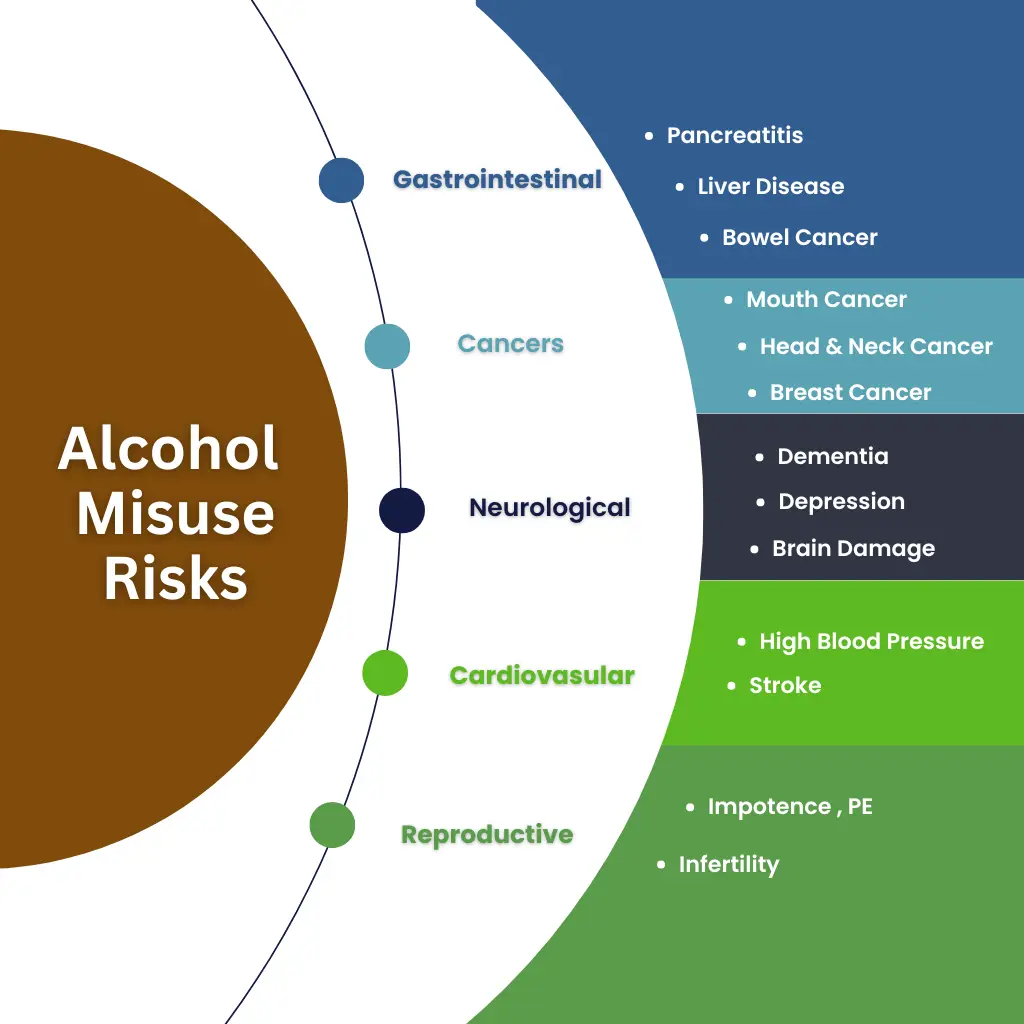
Illustration of the health risks associated with alcohol misuse

What a supervised withdrawal involves

Coming off alcohol or a physical drug dependence is the part that carries actual medical risk, and it is the stage most often attempted alone. A supervised withdrawal means a prescriber setting the medication, and staff watching for the things that go wrong, in a building where somebody is awake at four in the morning.

For most people it is uncomfortable rather than dangerous. For a minority it is genuinely serious, and the difference is not something you can judge from the outside.

Do not attempt this at home if any of these apply. Very heavy daily drinking, a previous withdrawal that brought on seizures, any history of delirium tremens, several substances at once, or a significant physical or psychiatric condition alongside. Those situations need somewhere with medical staff on site around the clock.

Three questions worth asking any clinic

If you take nothing else from this page, take these. Any decent place will answer all three without hesitating, and the hesitation itself is the useful information.

  • Is there medical and nursing cover on site through the night, or is it a visiting GP and somebody on call? Only the first is suitable for a withdrawal that carries real risk.
  • Who handles the mental health side, and are they here, or is it referred out? Names and job titles. A consultant psychiatrist and a clinical psychologist are the ones that matter.
  • What exactly is in the fee, and what will be billed separately? Withdrawal, trauma work, a single room and aftercare are the four that catch families out.
No surprises

From the first call to the first day

You do not need a referral, you do not need to see your GP first, and you do not need to have decided anything. Here is the whole sequence, so you know what you are picking up the phone to.

1

You tell us what has been happening

No script, no rush and nothing you have to disclose before you are ready. Whatever you are comfortable saying is enough to begin with, and you can ring back once you have had a think.

However long you need
2

We work out which level of care fits

How much is being drunk or taken and for how long, what the physical health picture looks like, whether there is anything going on with mood or trauma, and what has already been tried. That is what decides between hospital, residential and outpatient.

Usually the same call
3

You get named places and real figures

Two or three clinics, named, with what each costs, what is included and when they could take somebody. You can look each of them up before you reply. We check your insurance and handle the paperwork.

Admission often within 48 hours
4

We stay in touch after it ends

Finishing a programme is the point at which most people are quietly left to get on with it, and it is when the risk is highest. Weekly group support and check-in calls carry on for up to a year, for the family as well. Recovery does not stop at the front door.

Up to 12 months

Nothing happens that you have not agreed to

We do not contact anybody on your behalf without asking you first, we do not book anything until you say so, and nothing you tell us goes to your employer, your family or your GP. If you ring, think about it and never call back, that is a perfectly normal outcome and it happens every week.

Call 0203 955 7700
Wherever you are

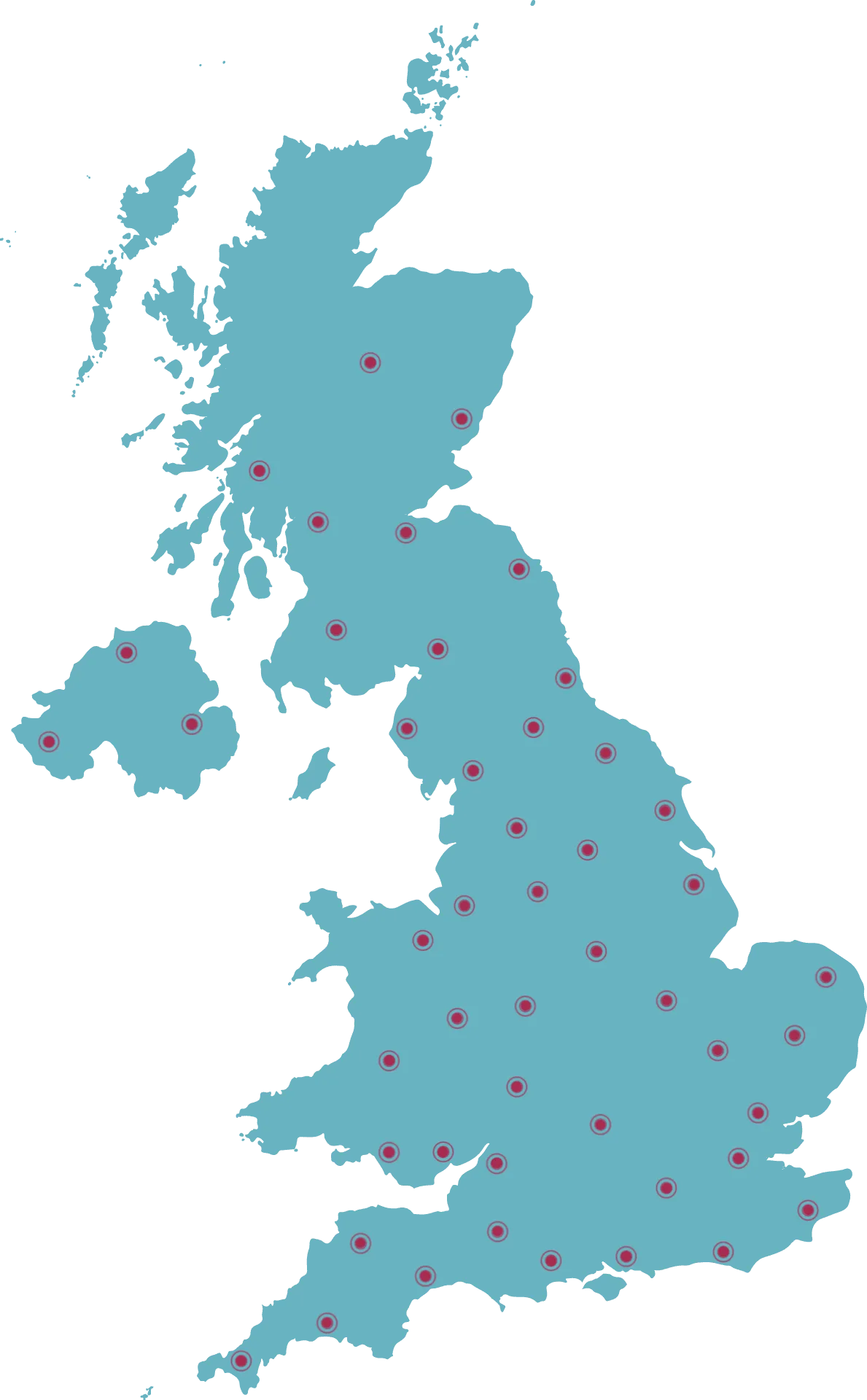
Where we can place you, in London and beyond

Our office is in Radlett, just outside the M25. The clinics we work with run from inside London out to the coast, and which of them suits you is partly a question of geography and partly a question of how far away from home somebody needs to be.

Plenty of families ask for somewhere close, so family can visit at weekends. Plenty of others deliberately want the opposite: a few hours away from the same streets, the same pub and the same phone contacts. Neither is wrong, and it is worth deciding which of those you are before you start comparing places.

  • Camden
  • Islington
  • Hackney
  • Westminster
  • Kensington and Chelsea
  • Hammersmith and Fulham
  • Wandsworth
  • Lambeth
  • Southwark
  • Greenwich
  • Lewisham
  • Croydon
  • Bromley
  • Barnet
  • Enfield
  • Haringey
  • Brent
  • Ealing
  • Hounslow
  • Richmond
  • Kingston
  • Merton
  • Sutton
  • Harrow
  • Hillingdon
  • Redbridge
  • Newham
  • Tower Hamlets
  • Waltham Forest
  • Havering
  • Barking and Dagenham
  • Bexley
  • the City

Free help you can use tonight

None of what follows costs anything, none of it requires a referral, and none of it goes through us. If you are not ready to talk about paying for treatment, or you are waiting for a place to come up, this is where to start. Meetings run every day, morning through to late evening, in every borough listed above.

We also cover the rest of the country. If somebody would do better a long way from home, look at Manchester, Liverpool, Leeds or Nottingham.

Accountability

Who wrote this, and who checked it

Anyone can publish a page about treatment. Fewer are willing to put a name to it. Here is who stands behind what you have just read, and where the facts came from.

Nicholas Conn, founder of Help 4 Addiction
Written by

Nicholas Conn

Founder, Help 4 Addiction

Nick started this in 2013, after coming through his own addiction and finding out the hard way how little straight guidance there was for a family trying to work out what to do next. He has since written about that period, and national newspapers and broadcasters regularly ask him to comment on drug and alcohol policy.

Read his full bio  ·  White Lines and Blue Lights

Where the information on this page came from

Worth saying plainly, because most pages on this subject cite nothing at all.

  • The inspection framework and the rating bands Taken from how the Care Quality Commission assesses substance misuse providers. You can check any registered place yourself on the CQC register.
  • The public funding figures Department of Health and Social Care grant allocations for 2025 to 2026, and the published share of council budgets that reaches residential placements.
  • The cost bands Published fees from providers operating in and around the capital, presented as ranges because that is what they are. Nobody should quote you a single number online.
  • What we are, stated once more An advisory and placement service, not a clinic. We hold no inspection rating because we deliver no treatment. The clinics do, and we will name them.
Before you ring

Questions families ask us most

If yours is not here, ring and ask it. Nobody will try to sell you anything, and nobody adds you to a mailing list.

Ask us directly
How much does rehab cost in London?

A day programme where somebody carries on living at home runs from roughly £1,000 to £4,800 for four weeks. A residential month starts around £4,200 at the entry level and climbs to about £21,800 for a consultant-led hospital programme. Private residential places in the capital commonly start near £8,500 for a fortnight, which is often the minimum stay. Our own partner network starts at £2,000 for seven days.

The headline figure is not the figure that matters. Ask what is included, because the medical part of the withdrawal, specialist trauma work, a single room and aftercare are all commonly billed separately.

Why is rehab so expensive in the UK?

Most of the cost is staff. A programme that manages a withdrawal safely needs nurses on shift around the clock, a prescriber, and therapists running daily sessions, for one person at a time in a residential building. Property adds the rest, which is why the same level of care costs noticeably more in and around the capital than it does elsewhere.

What the very top of the market adds is mostly not clinical. The gap between a good mid-range place and a flagship place is grounds, private rooms, catering and reputation rather than a different treatment method. Paying more does not buy a better outcome by itself.

How much is a 28 day stay at the Priory?

Their published rates put a 28 day residential programme from around £4,200 at the entry level, which is a therapeutic stay and does not include a medically supervised withdrawal. A consultant-led hospital programme with the medical side and twelve months of aftercare included is quoted at roughly £21,800 for the same 28 days.

We have no connection with them and we are not comparing quality here, only price, and published prices change. If you are considering them, ring them directly and ask what the figure includes. Then ask the same question of everywhere else on your list, because that is where the differences actually show up.

Is rehab covered by the NHS?

Not directly, and this surprises almost everyone. The NHS does not run residential programmes itself. Publicly funded places are bought by your local council out of its public health grant, and they are free at the point of care. The NHS side of it is the community drug and alcohol team, which does provide prescribing, keyworking and group work without charge.

The route runs like this: register with the community team through your GP or by referring yourself, engage with what they offer locally, then a caseworker prepares a submission and a commissioning panel decides. Under 5% of a typical council addiction budget goes on residential placements, so it is heavily contested and it runs in months rather than weeks. We cannot apply on your behalf, but we will tell you honestly if it suits you better.

There is a great deal of free help that needs no application at all. Community services provide prescribing, keyworking and group work. Alcoholics Anonymous and Narcotics Anonymous run free meetings across every borough, most days of the week, with nothing to book and nothing to pay. If money is the obstacle, start with those tonight rather than waiting.

Do you take a fee from the clinics you recommend?

Yes. When somebody we have spoken to decides to go to one of the clinics we work with, that clinic pays us a fee. That is what keeps our guidance free at your end. It does not add anything to what you pay, and it does not change what we recommend.

You should ask this question of any advisory service you speak to, and you should be wary of one that will not answer it. We do not own any of the clinics we work with, which is exactly why we can tell you when one of them is wrong for you.

Can I use my private medical insurance?

Often, yes, and a lot of policyholders never think to check. Insurers will only settle against a registered provider they already hold a contract with, so the choice of clinic and the terms of the policy are linked.

Two things catch families out. Many policies cap a residential stay at 14 or 21 days, and anything beyond that falls to you. The excess and any extras the policy does not cover stay with you as well. Tell us who you are insured with and we will find out what it actually means before you spend anything.

How do I check a clinic is properly registered?

Search the place by name on the Care Quality Commission register. Any provider running a medical withdrawal or a residential programme in England must be registered, and operating without that registration is illegal, so a missing entry is the end of the conversation.

Then read past the headline word. Every service is rated across five areas: safe, effective, caring, responsive and well-led. A place can be rated Good overall while carrying Requires improvement on well-led, which usually points at high staff turnover or thin clinical supervision underneath.

How do I know whether a medical detox is needed?

It is not something to judge from the outside, which is why the assessment call exists. As a rule, a withdrawal supervised around the clock is indicated where there is very heavy daily drinking, a previous withdrawal that brought on seizures, any history of delirium tremens, several substances being used at once, or a significant physical or psychiatric condition alongside.

Where any of those apply, a place relying on a visiting GP and somebody on call is not suitable. Ask directly whether there are medical and nursing staff in the building through the night.

What is the most effective addiction treatment?

No single addiction treatment suits everybody, and anybody claiming otherwise is selling something. What the evidence does support is matching the level of care to the severity of what is going on, and treating any mental health condition at the same time as the substance rather than afterwards. Where both are present and only the substance is treated, the other tends to bring it back.

In practice the components that keep turning up are cognitive behavioural therapy, trauma work where trauma is driving it, prescribing managed by a clinician rather than left to chance, and a structured plan for the months after the programme ends. The last of those is the most often skipped, and the most likely to decide the outcome.

What happens after the programme ends?

This is the stage families underestimate. The weeks straight after a residential stay carry the highest risk of relapse, because the structure disappears overnight and the old surroundings are still there. Early recovery is a period, not an event.

Some clinics build twelve months of aftercare into the fee and others sell it separately, so it is worth asking before you agree anything. On our side, weekly group support and check-in calls carry on for up to a year at no extra cost, and they are open to the family as well as the person who went.

A single phone call

You do not have to work this out on your own

You do not need to have decided anything, and you do not need to know what you want. Tell somebody what has been going on and let them tell you what the real options are. If a free route fits, we will say so.

  • Free and confidential
  • Answered by a person, not a menu
  • Every clinic named before anything is booked

Who am I contacting?

Calls and contact requests are answered by our admissions team at Help 4 Addiction. We work with a network of addiction rehabs throughout the UK and also some internationally. We do not own any of these clinics and we receive payment for our referral services.

We look forward to helping you take your first step.

0203 955 7700